 Continuous Education
Academy · CEA
Continuous Education
Academy · CEA








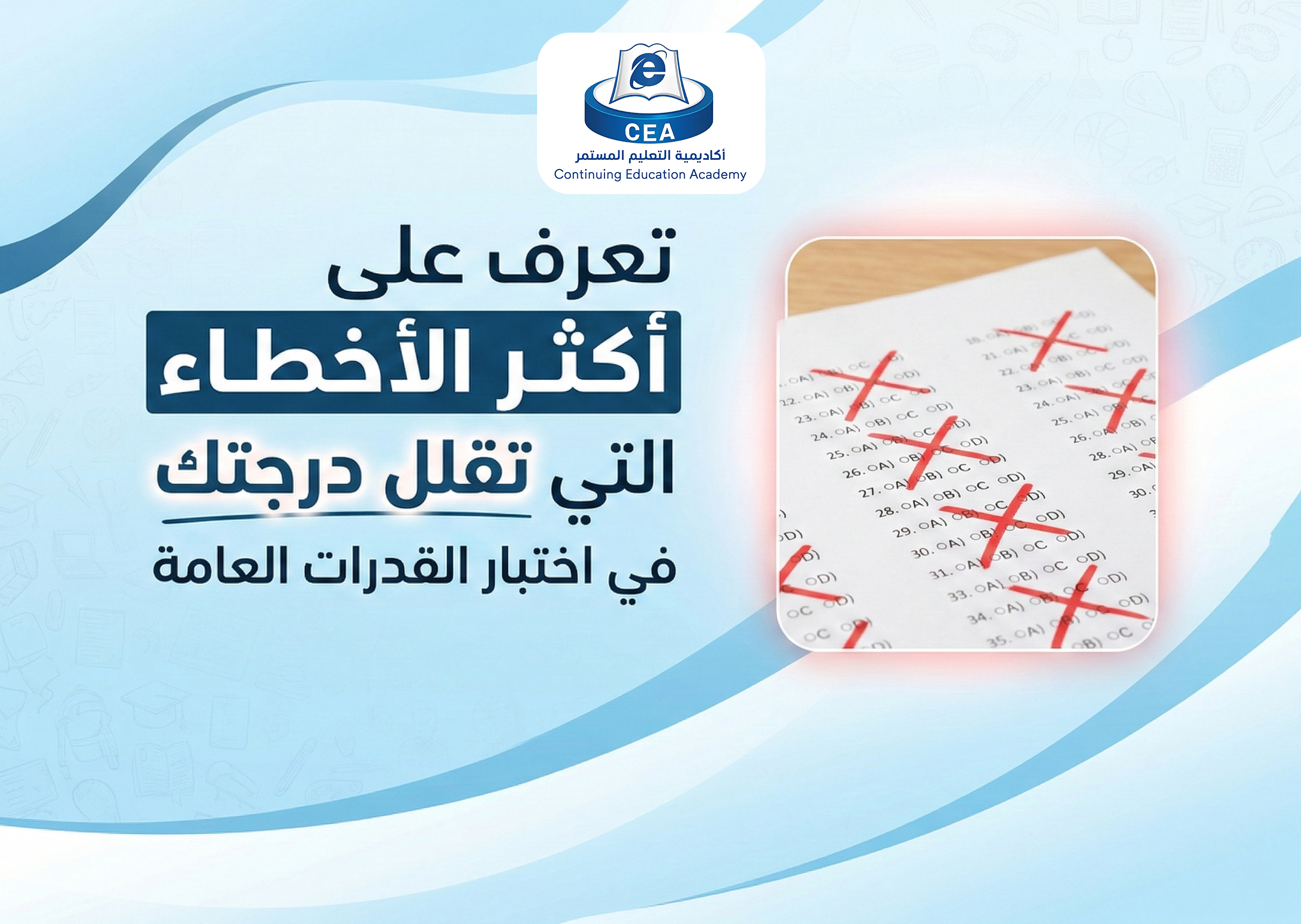
أخطاء شائعة تضيع درجاتك في اختبار القدرات بدون ما تنتبه Common Mistakes That Lower Your GAT Score Without You Noticing
اكتشف الأخطاء الشائعة التي تقلل درجتك في اختبار القدرات العامة وتعرف على أفضل الطرق لتجنبها ورفع درجتك بسرعة من خلال استراتيجيات ذكية.
لماذا يخسر كثير من الطلاب درجات سهلة في اختبار القدرات؟
العديد من الطلاب يذاكرون لاختبار القدرات العامة بجهد كبير، لكنهم يفقدون درجات مهمة بسبب أخطاء بسيطة يمكن تجنبها بسهولة. أحيانًا المشكلة ليست في صعوبة الأسئلة، بل في طريقة التعامل معها.
الخطأ الأول: إضاعة وقت طويل على سؤال واحد
البقاء على سؤال صعب لأكثر من دقيقتين قد يكلفك عدة أسئلة أخرى سهلة.
الحل: تخطَّ السؤال الصعب وعد إليه لاحقًا إذا سمح الوقت.
الخطأ الثاني: المذاكرة بدون خطة واضحة
الدراسة العشوائية تقلل من التركيز وتضيع الوقت.
الحل: وضع جدول مذاكرة أسبوعي يشمل القسم الكمي واللفظي بالتوازن.
الخطأ الثالث: تجاهل التدريب الزمني
الكثير من الطلاب يحلون الأسئلة بدون توقيت، ثم يتفاجؤون بضيق الوقت داخل الاختبار.
الحل: حل اختبارات قدرات كاملة بتوقيت حقيقي.
الخطأ الرابع: عدم تحليل الأخطاء السابقة
حل النماذج دون مراجعة الأخطاء يجعل الطالب يكرر نفس الغلط.
الحل: بعد كل اختبار تجريبي، دوّن أخطاءك وافهم سبب الخطأ.
الخطأ الخامس: التوتر الزائد يوم الاختبار
القلق يؤثر على التركيز وسرعة الحل.
الحل: التدريب المتكرر يقلل رهبة الاختبار ويزيد الثقة.
كيف تضمن عدم تكرار هذه الأخطاء؟
✔ التزم بخطة مذاكرة منظمة
✔ درّب نفسك على نماذج محاكية لاختبار القدرات
✔ راجع أخطاءك باستمرار
✔ حسّن سرعة الحل في القسم الكمي
✔ طوّر مهارات القراءة في القسم اللفظي
كل درجة إضافية قد تصنع فرقًا في فرص القبول الجامعي، لذلك تجنب هذه الأخطاء وابدأ تدريبك بذكاء.
Why Do Many Students Lose Easy Points in the GAT?
Many students prepare hard for the General Aptitude Test (GAT), yet they lose valuable points due to small and avoidable mistakes. Often, the problem is not the difficulty of the questions — but how students handle them.
Mistake #1: Spending Too Much Time on One Question
Staying on a difficult question for too long can cost you several easier points.
Solution: Skip challenging questions and return to them later if time allows.
Mistake #2: Studying Without a Clear Plan
Random studying reduces focus and wastes time.
Solution: Follow a structured weekly study plan that balances both Quantitative and Verbal sections.
Mistake #3: Ignoring Timed Practice
Many students practice without time limits and then struggle with time pressure during the real exam.
Solution: Solve full-length mock GAT exams under real test conditions.
Mistake #4: Not Reviewing Previous Errors
Solving practice tests without analyzing mistakes leads to repeating them.
Solution: After every mock test, review your errors carefully and understand why they happened.
Mistake #5: Excessive Test Anxiety
Stress affects concentration and problem-solving speed.
Solution: Frequent practice and realistic simulations reduce exam anxiety and increase confidence.
How to Prevent These Mistakes
✔ Follow a structured preparation strategy
✔ Practice with realistic GAT mock exams
✔ Review mistakes consistently
✔ Improve calculation speed in the quantitative section
✔ Strengthen reading skills for the verbal section
Every extra point can improve your university admission chances, so prepare smart and avoid these common mistakes.
jana shadi
More from jana shadi
عروض MEETS KSA 2026 ...
12 Oct 2026
كيف تحصل على ...
4 Mar 2026
Top 5 Vocabulary Myths in the ...
20 Jul 2026Comments
Reply to Comment